
"all rabbi"
900 article(s) found

The relationship between Kenyan coffee and Arabica coffee beans
Arabica coffee accounts for about 65% and 80% of the world's coffee beans, and its excellent flavor and aroma make it the only coffee among these native species that can be drunk directly and alone. However, its resistance to drying, frost, diseases and insect pests is low, especially to the biggest natural enemy of coffee, leaf rust, so all producing countries are committed to improving varieties. For example, the well-known Sri

Kenya Coffee Estate Arabica Coffee Estate Introduction Boutique coffee beans
Arabica and Rochester: Arabica: 60% of global production, best grown at high altitudes, lower temperatures and lower yields. It has a stronger flavor, more body and acidity (please email me if you want to know more about coffee tasting definitions of body and acidity); about 1% caffeine (by weight); high price: robert accounts for 40% of global production,

Indonesian Coffee Arabica Coffee Flavor introduces the characteristics of Indonesian Coffee
Arabica coffee trees grow between 900m and 2000 m above sea level; they are hardy, and the suitable growth temperature is 1524 ℃; they need more humidity, and the annual rainfall is not less than 1500 ml. At the same time, they also require higher cultivation techniques and conditions. Arabica coffee beans are mainly grown in South America (except Argentina and parts of Brazil), Central American countries and Africa.

Nutrition of Arabica coffee beans what are the nutritional values of Arabica coffee beans?
Arabica coffee beans are the raw materials for making coffee, but now very few people use coffee beans to make coffee, and most of the time they brew instant coffee directly, but the nutritional value of Arabica coffee beans can not be caught up by eight horses of instant coffee. So what are the nutritional values of Arabica coffee beans? As follows: 1. Contains caffeine. Caffeine is a coffee shop.

Introduction of Arabica Coffee beans with excellent Flavor
Arabica Canephora Robusta has a significant difference. Beans are different, plants are different, and then, their scope of use is also different. Arabica coffee has a rich and delicate taste, strong smell, high acidity and slippery texture: it is not easy to be bitter; caffeine is lower than Robusta coffee. Its excellent flavor and aroma make it the only coffee that can be drunk directly.
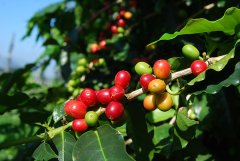
Comparison of three original species of Coffee Tree Arabica Coffee Tree
Everyone should have heard of Elaraby as a kind of coffee. The best quality beans of the famous Colombian coffee are all Elaraby varieties. When it comes to the variety of coffee, we must first understand the type of coffee tree. At present, the most important coffee beans in the world are mainly from Arabica, Robata and Liberia. these three varieties of coffee beans are the three original species of coffee trees.
Arabica Coffee beans Coffee cultivation in China
Arabica coffee accounts for 70% of all coffee production, and its excellent flavor and aroma make it a direct drinkable coffee with only eight Arabica beans (8). But its resistance to dryness, frost, diseases and insect pests is too low, especially the natural enemy of coffee-leaf rust, so all producing countries are committed to

The characteristics of Arabica beans nutritional caffeine of Arabica coffee beans
The nutrition of Arabica coffee beans Arabica coffee beans are the raw materials for making coffee, but now very few people use coffee beans to make coffee, and most of the time they brew instant coffee directly, but the nutritional value of Arabica coffee beans is beyond the reach of the eight horses of instant coffee. So what are the nutritional values of Arabica coffee beans? The contents are as follows: 1.

Flavor description of Brazilian Arabica Bourbon Coffee Bean
Arabica Bourbon Coffee Bean Flavor description treatment Arabica intraspecific Hybridization 1. New World (Mundo Novo): a natural hybrid of Bourbon and Sumatra iron pickup, first found in Brazil, is regarded as the new hope of the Brazilian coffee industry, so it is named the New World species. two。 Catuai: a hybrid of New World and Kaddura, bearing solid fruit

Introduction of Arabica Coffee Flavor description treatment Variety characteristics and producing areas
Arabica Coffee Flavor description treatment Variety characteristics of Arabica Coffee although both are widely cultivated, there are significant differences in Arabica Canephora Robusta. Beans are different, plants are different, and then, their scope of use is also different. Arabica coffee has rich and delicate taste, strong smell, high acidity and slippery texture: it is not easy to be bitter; caffeine
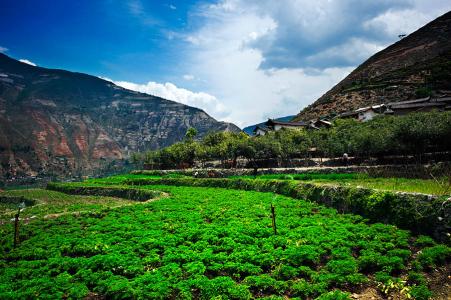
Description of planting area and Flavor of Arabica Coffee beans in Sumatra
The planting area and flavor of Arabica coffee beans in Sumatra describes that Arabica coffee is difficult to grow. They like mild days and colder nights, and a climate that is too cold, too hot, and too humid can be fatal. Coffee trees in Arabica need to be planted on sloping slopes at high altitude. they grow luxuriantly in the highlands (600-1800 meters).
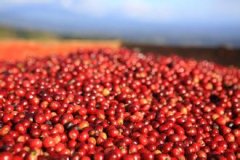
Arabica Coffee Bean and Coffee Manor A brief introduction to Arabica Coffee Manor
Arabica coffee accounts for 70% of all coffee production, and its excellent flavor and aroma make it the only coffee that can be drunk directly. However, its resistance to dryness, frost, diseases and insect pests is too low, especially the natural enemy of coffee-leaf rust, so all producing countries are committed to variety improvement. Arabica species (Coffea

What is the difference between Robasta beans and Arabica?
Arabica coffee beans describe and define the taste spectrum of coffee according to its taste (sour, bitter, sweet, salty) and wet aroma (flower, fruit, nut, chocolate, spice, etc.). It serves for a professional cup testing system. For the general public who drink coffee is just a simple hobby, there is really no need to take it seriously, not to mention the taste itself.

Characteristics of the price of Arabica coffee
Price characteristics of Arabica coffee although there are many kinds of coffee in coffee shops, in the final analysis, there are only two kinds of artificially grown coffee, one is Arabica, the other is Coffea robusta (canephora), both of which are introduced from wild species. But its resistance to dryness, frost, diseases and insect pests is low, especially to coffee's biggest natural enemy.

The function of the price characteristics of Arabica coffee beans
The price characteristics of Arabica coffee beans small-grain coffee is still the most important coffee variety, accounting for about 3% of the world's total coffee output. It is mainly grown in Latin American countries, but also partly in Indonesia and the Pacific islands. The geographical and climatic conditions of Brazil, the world's largest coffee producer, are very suitable for the growth of small-grain coffee, and the main varieties of coffee grown are also small.

Introduction to the flavor and taste of coffee manor in Arabica, Ethiopia
Arabica is deeply loved by Chinese people with a short history of coffee contact because of its strong fruity aroma. it was introduced to China by missionaries in the 19th century and was widely planted in Panzhihua, Sichuan, and the dry-hot valley of the Jinsha River in western Yunnan, where the sunshine was long and there was a big temperature difference between day and night. The local people solved the problem of insufficient seasonal rainfall by diverting water up the mountain.

Characteristics of Arabica coffee beans the difference between Arabica coffee beans and other coffee beans
What is the difference between Arabica coffee beans and other coffee beans? I have a great interest in coffee (excluding instant coffee). Through my own attempt and Zhihu's study, I know that the taste is related to the degree of roasting, and the most important one is also related to beans. Over the past year, I have been trying to drink hanging-ear coffee and found that it is common: Mantenin, Yega Chefe, Guatemala, Kenya and so on. Went there last month.
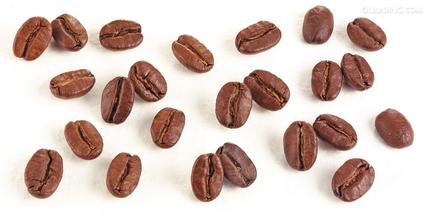
Arabica Coffee Bean Family introduces the characteristics of Price Origin
Arabica coffee bean family introduction price producing area characteristics Arabica is deeply loved by Chinese people with a short history of coffee contact because of its strong fruity aroma. it was introduced to China by missionaries in the 19th century. It is widely planted in the dry-hot valley of the Jinsha River, which is more than 1000 meters above sea level in Panzhihua, Sichuan and western Yunnan. The local people use the way of diverting water up the mountain.
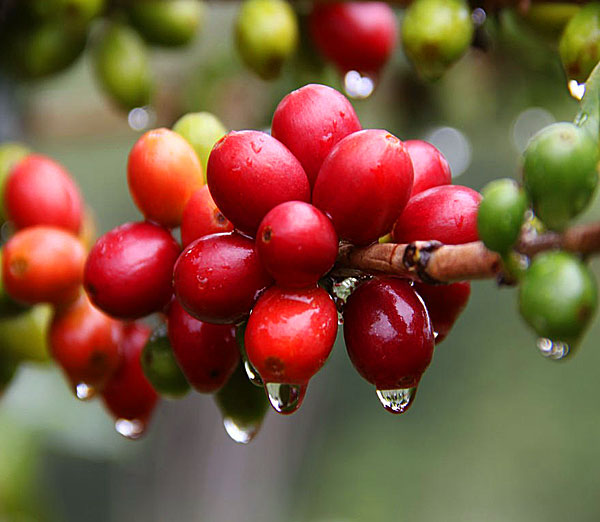
History of Arabica beans Arabica bean varieties derived from Arabica beans
The origin of the historical Arabica species (Coffea arabica) is the Abyssini Arabica sub-plateau (Abyssinia, now known as the Ethiopian plateau) in Ethiopia. In the early days, it was mainly eaten as medicine (Islamic monks used as a secret medicine to cure the body and mind or to awaken the brain), developed the habit of baking and drinking in the 13th century, and passed through the Arab region in the 16th century.

Arabica coffee bean variety Arabica variety
Arabica bean scientific name: coffea arabica (Arabica bean) family: Rubiaceae coffee tree can be divided into two main varieties: Arabica species (coffea arabica) and Robusta species (coffea robusta/coffea canephora) (rare on the market). Arabica (Coffea arabica) is the most traditional Arabica coffee variety. Originated in the east